





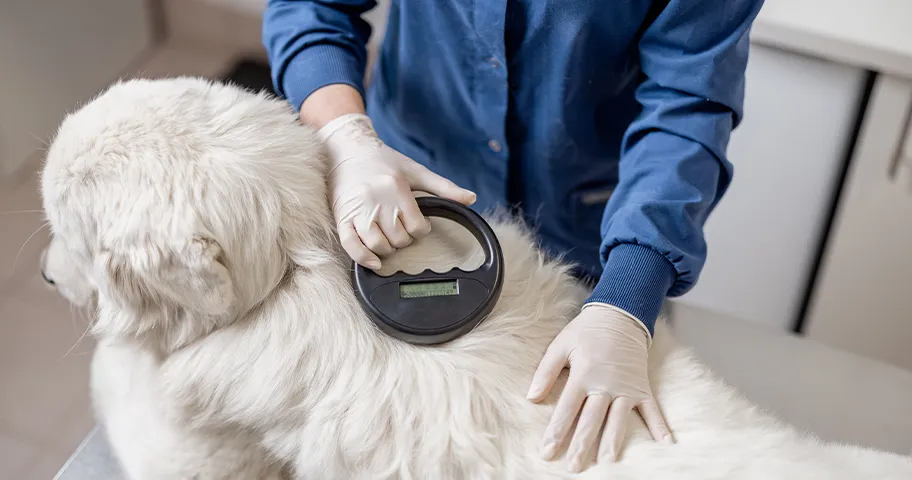
If you are planning to bring home a new pet, you should ensure it's registered and microchipped.
What is pet microchipping?
Pet microchipping is when a tiny (about the size of a single grain of rice) microchip is placed inside your pet, usually in the scruff of its neck. The chip stores a number that can be linked to a corresponding record in a national pet registry, such as the National Dog Database.
Because pet microchips are passive, they do not contain any internal battery, nor do they transmit any information unless read by a microchip scanner. This means they can't be used to track a lost animal. So to be successfully reunited with a lost pet, it's crucial to keep your pet register contact details up to date.
Why microchip your pet?
Pet microchipping is for identification purposes. While (nearly) all pets are required to be logged in a national registry, it's of no use if the pet itself can't be identified. For example, there's no way to identify the owner of a lost dog with no tag. However, if the dog is microchipped it can be scanned, identified, and linked back to its owner.
Another reason for microchipping is to prevent owners from concealing the identity of pets. For example, if a council deems your dog to be dangerous, your dog is required to be:
- Kept in a fenced area of your property, separate and fenced from the entry into your property
- Either neutered or certified unfit to be neutered
- Muzzled in public, except when in a vehicle or cage
- On a leash at all times in public, except when in a dog exercise area
Some owners may ignore these requirements and, if caught, could aim to conceal the dog's identity. Microchipping makes this impossible, as the pet's unique number will link it back to the registry, which contains all the information about the pet, including its dangerous classification.
Which pets need microchipping?
Microchipping is required for all dogs registered in New Zealand for the first time, with the exception of working farm dogs. While you are required to register your dog every year (to keep the relevant information up to date) microchipping is only required once.
If you fail to microchip and/or register your dog you can be fined $300.
Cats are not required to be microchipped or registered at a national level. However, certain districts have introduced their own bylaws that have mandated microchipping for cats.
For example, in 2016, the Wellington City Council was the first in NZ to mandate microchipping for all domestic cats. Since then, several others councils have followed suit.
As cat legislation is more ad hoc than it is for dogs, and is largely down to local levels of government to control, be sure to check with your own district the requirements surrounding cat ownership (including microchipping).
Furthermore, even if it's not required by law, microchipping your cat is a good idea. As mentioned above, it makes identifying your pet much easier. And should your cat be lost or stolen, it will be easy for it to be identified and returned to you.
How much does microchipping cost?
Microchipping itself is relatively cheap. According to the Department of Internal Affairs: "The one-off cost of the microchip is between $12 and $20, plus any insertion and verification fees. Insertion and verification could cost up to $70, but your vet may reduce the cost if insertion is done at the same time as vaccination or another procedure."
All up, a trip to get your pet microchipped should cost you less than $100. Furthermore, depending on the type of pet insurance plan you've chosen, you may even find that microchipping is covered under your policy.
Does pet microchipping hurt? Is it safe?
Pet microchipping is relatively quick and painless, just like an injection. It is also extremely safe and poses little risk. A study found that of approximately 2.3 million microchips placed, only 165 chips moved around and there were just 122 instances of an adverse reaction, such as the microchip not working or causing an infection.