












Expert energy tips
Shop around and compare energy providers
Don’t be a sitting duck when it comes to your energy provider. Shop around and switch providers if you find a better deal. Electricity prices can and do change regularly so check at least annually. Remember – once you’ve found a new provider, switching can often be as simple as filling out an online form.
Dial back your electricity usage and dial up your savings
Small changes around the home can help reduce your electricity use and potentially lead to big savings. Choose energy-efficient appliances, put lids on your pots to speed up the cooking time, wash your bulkier items on sunny days and unplug your appliances when you’re not using them.
Save by using off-peak power
All electricity companies will have to offer time-of-use plans by the middle of next year, which offer cheaper off-peak power. But don't wait until then! Many power providers already offer less expensive or free off-peak power, which can lead to real savings if you're able to limit the use of your power-hungry appliances to periods during the day, overnight or at weekends.
Best power deals in NZ (April 2026)
Of all the power companies, Mercury consistently offers the most bells and whistles with its plans. Mercury's current deals include:
- $300 free power credit for new electricity customers on a one-year contract.
- Bundle discount of 17.25c per day on gas charges when you bundle gas and electricity.
- Twelve months' half-price broadband (worth between $414-$690) for bundling eligible electricity and broadband plans on a one-year term.
- Twelve months' half-price mobile (worth between $114-$474) for bundling eligible electricity and mobiles plans on a one-year term.
- Bonus Samsung products (TV, fridge, washing machine, heat pump, phone, or stick vac) when you sign up to electricity and broadband on a two-year term.
Of course, as with all fixed-term deals, Ts&Cs apply, which can include break fees. And, before signing up to a long-term contract that offer bonus incentives, it's always a good idea to compare prices against regular plans, to check if you're overpaying for the value of the bonuses on offer.
Through the Mercury app, customers can also earn points that can be redeemed for account credits and free power. Mercury also offers its electricity customers regular free power days.
For the full rundown of the Best Power Deals in NZ for April, click here!
Best electricity providers in NZ
Here are the top electricity providers, as rated by everyday Kiwis, in our latest Most Satisfied Customers ratings:
- Electric Kiwi
- Powershop
- Nova
- Globug
- Meridian
- Genesis
- Mercury
- Contact
- Pulse
Guide to energy in New Zealand
How to switch energy plans or providers
1. Grab your latest bill. There are only two main charges you need to concentrate on:
- Fixed charges – these are displayed as cents or dollars per day. You are charged this fixed-rate each day, regardless of how much power you use
- Variable charges – the cost of the power you've used, based on consumption in kilowatts per hour (kWh)
Your bill should also include a charge for the Electricity Authority levy. This charge funds the government agency's work to regulate the electricity industry, and is usually based on how much power you use. But don't include it in your calculations, as it's not relevant to an individual electricity provider's power deals.
2. Jump online and get comparing different power companies and the deals they're offering. Most retailers have websites that allow you to compare their plans according to your address.
All you need to do is some simple arithmetic, to compare the total cost of your variable and fixed-rate charges on your bill with your current provider against what's on offer from a competitor.
3. Things to consider when switching providers include:
- Standard user vs low energy user: Are you a standard user or a low energy user? This can affect the amount you pay for your daily charges and the power you use. See below for more details on low and standard user electricity tariffs.
- Off-peak usage: Cheaper off-peak electricity isn't available everywhere, or offered by all retailers. Typically offered overnight and at weekends, it can save you money if you can adapt your home's energy usage to fit in around the off-peak times.
- Free power period: Some retailers offer free power periods, usually off-peak. If you can coordinate your high-power usage around such a deal, you can make considerable savings. Think: running washing machines, dishwashers and heat pumps, or taking baths and showers.
- Fixed contracts: By signing up to 12- or 24-month contracts you can usually secure a cheaper price. Although be aware that break fees will apply if you need to end your power contract early.
- Bundle deals: You can often save heaps on your power if you bundle it with either gas or broadband.
- Special offers: If you're switching power companies, it always pays to factor in any special offers attached to the deal you're being offered. While whiteware, electrical goods, reward points or offers of cash might seem appealing, there can often be a catch. So check the cash value of any reward against the long-term cost of the power plan it's tied to.
4. Once you've picked out a new energy provider, you'll need to complete the sign-up process. You can do this by following the links from Canstar where available, heading to the provider's website, or calling its customer service team.
Generally, switching electricity providers takes around a week from the time of sign-up, although it can take up to 10 business days.
Your new energy provider will handle the process, so you won't need to contact your current provider.
You'll receive a final bill from your current energy retailer once the switch is complete. And you'll also receive information from your new provider detailing your new plan's rates and fees.
Why do I need to compare energy plans?
Comparing energy plans regularly is the best way to make sure you've a competitive deal. You should think about getting energy quotes if:
- You've experienced a higher than expected power bill.
- You're moving house.
- You're installing solar panels.
- You're interested in green, renewable or carbon neutral energy.
- You're considering bundling electricity and/or gas with internet or mobile services.
You should compare energy plans at least annually.
How is electricity use calculated and charged?
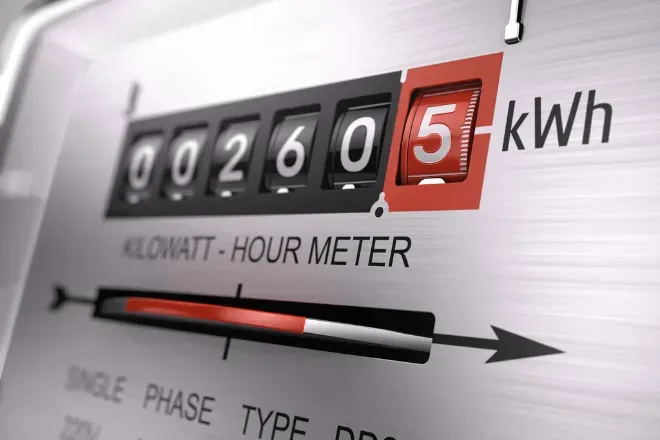
Electricity usage is measured in kilowatt hours (kWh). A kWh represents the amount of power (in kilowatts/kW) used each hour: for example, if you use a 5kW appliance for one hour, that will use 5kWh of electricity.
Your household electricity usage in kWh is recorded by your electricity meter each billing period, then passed on to your energy provider. Your provider will charge you for each kWh of electricity used, in cents per kilowatt hour (c/kWh). This is called a usage charge or usage rate, and will vary between providers, plans and distribution networks.
Your power bill will list the number of kWh you've used, plus the usage rate in c/kWh. Multiply the c/kWh cost by the number of kWh used, and you’ll get the total usage charge for that billing period.
In addition to usage costs, your electricity bill also includes a daily supply charge. This is a fixed daily fee set by your provider that typically covers network charges, and is calculated in cents per day. Your total bill will consist of both your usage and supply charges.
Keep in mind that usage charges apply even if you haven't used any electricity.
What are low- and standard-user electricity tariffs?
There are two electricity user tariffs in New Zealand:
- Standard user: a household that uses over 8000kWh per year
- Low user: a household that uses under 8000kWh per year
Low users pay a lower fixed-rate daily charge, but higher prices for the power they use. However, because most Kiwi homes are now low users, the low-user electricity tariff is being phased out.
As a consequence, if you're on the low-user tariff, your power bills will have already started to rise.
Currently, the low-user daily tariff is capped at $1.80 per day, up from 30c per day prior to 1 April 2022. And from April next year, the cap will be removed altogether.
What are peak and off-peak electricity times?
Peak and off-peak electricity times refer to separate usage rates that are charged for different times of the day. A flexible pricing tariff means customers are charged three separate electricity usage rates for either 'peak', 'off-peak' or 'shoulder' periods.
- Peak: Charged during periods when there is high demand for electricity. Peak usage rates are generally applied from 7am-9am and 5pm-9pm and are higher than those charged in off-peak or shoulder periods.
- Off-peak: Charged during periods of reduced energy usage. Off-peak electricity rates generally apply from 11pm-7am and are cheaper than shoulder or peak period rates.
- Shoulder: Charged between peak and off-peak periods, when there's mild demand for electricity. Shoulder rates usually apply from 9pm to 11pm and 9am to 3pm. Shoulder rates are more expensive than off-peak rates and cheaper than peak rates.
Gas in New Zealand
There are two type of gas available to households in NZ:
- Natural gas
- Bottled gas
While bottled and natural gas perform the same tasks – both are used for heating and cooking in the home – there are differences between the two:
Natural gas
Natural gas is often referred to as mains gas or piped gas. It is primarily methane, unlike bottled gas, which is usually butane or propane.
There are over 2500kms of high-pressure supply pipelines across New Zealand's North Island.
This mains gas network provides a natural gas supply to over 60,000 households. The gas is supplied via a meter, and customers pay a bill for their usage, in the same way as they are charged for water and electricity.
Bottled gas
Bottled gas is either butane or propane gas that has been compressed into a liquid form and bottled. When release from its pressurised container, the liquid reverts to a gas, which can then be burned to fuel heating or cooking in the home.
Because the mains gas network is limited to the North Island, and new mains gas connections are prohibitively expensive, bottled gas is the only option for many households if they want a gas supply.
If your home isn't already connected to mains gas, it can be an expensive process to obtain a natural gas connection.
If your home isn't serviced by a natural gas connection, another option is to use liquefied petroleum gas (LPG) instead, which is delivered in cylinders, rather than piped through a mains connection.
Gas rates and charges explained
Gas bills consist of two main charges: usage charges and supply charges.
Gas usage charges
As with electricity, gas usage charges are measured in kWh. Usage charges are recorded through a gas meter and will be shown on your bill. Your usage charges may vary according to your gas supplier’s usage rates, as well as your location.
Gas supply charges
Gas supply charges are the fixed portion of your bill and reflect the cost of being connected to the mains gas network. Supply charges are generally measured in cents per day (e.g. 243 cents per day).
You will be billed for supply charges regardless of how much gas you use.
Additional fees or charges you may incur include:
- Move in/new connection and disconnection fees
- Early exit fees (on contracts)
- Credit card surcharges
- Dishonour fees
- Paper billing fees
How long does a gas bottle last?
Homes using bottled gas usually have two 45kg bottles. When one empties, supply switches to the other and a replacement is ordered for the empty bottle.
How long a gas bottle lasts depends on your power usage, whether you're using the gas for cooking, heating, hot water, or a combination of all three. Obviously, the more gas you use the more bottles you will have to purchase.
However, here's a rough guide to gas bottle consumption for an average home:
- Home heating only: 6-9 bottles per year
- Hot water for family of four: 6-9 bottles per year
- Gas cooktop: 1-2 bottles per year
Should I bundle electricity and gas?
Some providers may offer discounts or incentives for bundling electricity and gas in a dual fuel plan. However, you should only bundle with one provider if you're still getting a good price for both products.
Pros of dual fuel:
- Simplifies your bills, as it's all through one energy provider.
- Can save you money if you get a discount and competitive rate.
Cons of dual fuel:
- Doesn't guarantee you'll pay a lower usage or supply rate for your energy.
- Some retailers only offer natural gas if you are already on an electricity plan.
To find the best deal, compare electricity and gas offers separately, and get energy quotes from a range of providers before deciding.
Solar in New Zealand
What is solar?
Solar energy is a type of renewable energy created by converting heat and light from the sun into electricity. This energy can be used to replace or supplement the grid-supplied electricity you buy from an energy retailer.
A home solar energy system typically uses photovoltaic (PV) solar panels and an inverter to collect sunlight and convert it into usable electricity.
Some home solar systems feature batteries, that store power and make it available for use at night.
Solar thermal systems use heat from sunlight to create hot water for use in a home.
What is a solar buy-back rate?
Many power companies will purchase excess solar energy generated by their customers. The amount paid for the power is called a solar buy-back rate.
The amount you earn is calculated based on the number of kilowatt hours (kWh) you export back to the power grid, and is applied as a credit on your electricity bill.
Solar buy-back rates vary between providers and plans, and some power companies pay more for power produced during peak times, so it's important to check what's on offer when comparing solar options.
If you have a home battery, there are also options available for you to sell excess energy during the night.
Generally, buy-back rates are around 12-13c per kWh, but can be as low as 5c and as high as 23c per kWh.