

















What is a construction loan?
A construction loan is a loan designed for people building a home, instead of buying an established property. It has a different loan structure to a conventional mortgage for a pre-existing home.
Usually, a construction loan is drawn down progressively. This means that you draw down the loan (increase your borrowing) in stages, as you pay for the progress of your new build. For example, as each stage of your home is completed, the builder will invoice you for the work done. You then submit that invoice to your lender for payment.
The amount available to borrow is based partly on the estimated value of the property upon its completion. And a construction loan usual has a variable interest rate, until the last payment on the house is made, when you renegotiate with your lender to switch to a standard mortgage.
How do progress payments work?
Once a construction loan has been approved and the construction of the property is underway, lenders make progress payments throughout the stages of construction. Generally, the payments are made upon completion of five stages:
1. Slab down
When the foundations of the property are laid. This involves the levelling of the ground, as well as the plumbing and waterproofing of the foundation.
2. Frame stage
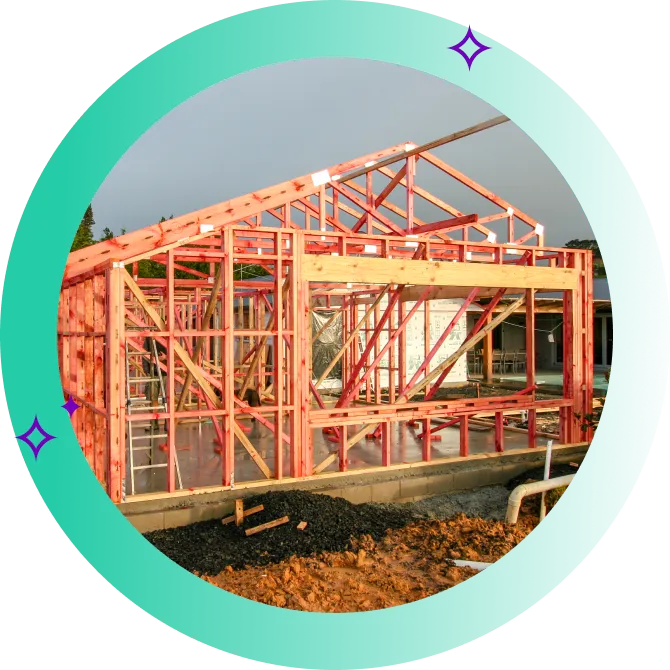
Completion of the frame of the property. It covers partial brickwork, the roofing, trusses and windows.
3. Lock-up
Building of the external walls and the addition of windows and doors. At this stage the house becomes lockable, hence the term lock-up.
4. Fit-out or fixing
Completion of the internal fixtures and fittings. It covers the internal walls and ceilings, part-installation of cupboards and benches, plumbing, electricity and gutters.
5. Completion
The conclusion of contracted items (e.g. builders, equipment), as well as any finishing touches, such as plumbing, electrics and general cleaning-up.
As the loan is progressively drawn down, interest and repayments are calculated based only on the funds used. For example, if by the third progressive payment only $150,000 has been drawn down on a $300,000 loan, interest is only charged on $150,000.
It's also important to note that most banks require you to use all of your equity before they release the next payment.
How to get a construction loan
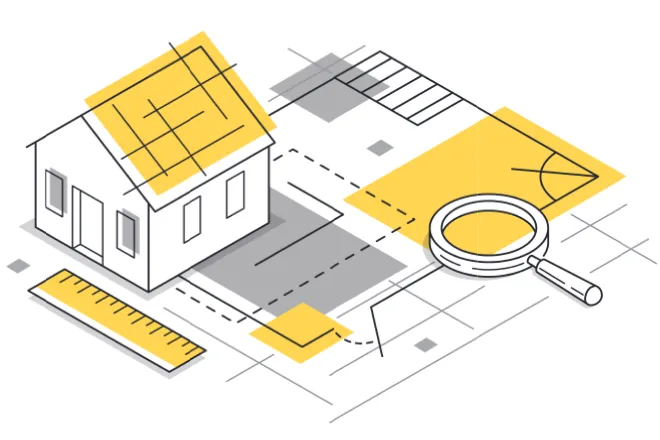
Getting approval for a construction loan is a different process to applying for a standard home loan on an existing home. To ensure a smooth process, the first step is to present your lender with professional plans for your property.
A property appraiser will then review the plans to determine the expected value of the completed property. This is because, when considering your mortgage, the lender will review not only your construction bill, but the value of the finished home.
Once the plans have been reviewed, your lender will ask you to approve a loan offer for the property. At this point you pay your deposit, as you would with most other types of home loan. This acts as security for your lender. And, as with a normal home loan, the more you can save for your deposit the better.
At each stage of the construction process, you'll need to confirm that the work has been done. To do this, you complete and sign a drawdown request form, and send it to the construction department of your lender.
Can you use a standard home loan instead of a construction loan?
Yes. If you've enough equity in the land you're building on, or in another asset, such as an investment property or family home, you'll be able to borrow the amount that you need, without using your to-be-constructed house as security.
The advantage of redrawing from an existing loan is that you will have access to the entire lump sum of money. This means you'll be able to pay all construction costs as they come in, including smaller incidental costs, instead of having to access progress payments through your bank. This is a particular advantage for owner-builders and those who are DIYing some parts of the construction.
A potential disadvantage is that from the moment you fully drawn down your loan, you'll pay interest on the full amount. But this can be mitigated by placing any not-yet-spent construction money in a 100% offset account against your loan.
What are owner-builder mortgages
An owner-builder mortgage is a construction loan for people who intend to build their house themselves, without the help of a professional builder.
Lenders can be hesitant to accept applications for owner-builder loans, and approval conditions are stricter, because of the higher risks involved.
For if you are an unprofessional owner-builder and botch the build, your mortgage provider has a greater chance of not recouping its money.
What costs are associated with a construction loan?
Compared to purchasing an existing dwelling, building a new home comes with addition costs, these include:
- Architect or draftsman.
- Construction professionals, including: builders, engineers, tradies, quantity surveyors and project managers.
- Contract works insurance.
- Council documents, including LIM report.
- Project delays and cost blow-outs.
- Resource and building consent.
- Solicitor fees.
- Temporary housing costs and storage fees.
- Valuations.
- Water, power and broadband connection costs.
How to reduce the cost of building a new home
There are things you can do to keep building costs down:
- Avoid elevated sites, exposed to the wind, and unsuitable ground that requires engineering design, or places with difficult site access
- Build a smaller home
- Buy land in cheaper new greenfield developments, outside of more expensive inner-city suburbs
- Don't build cantilevered decks, roofs and floors
- Don't use expensive cladding, like cedar, or roofing, such as tray roofing
- Don't use large square metres of glass (requiring steel portals)
- Have smaller rooms, not open, expansive living areas that requiring engineering due to the lack of walls to brace
- If possible buy a flat level site, avoid steep (or even not so steep) sites that require retaining walls
- Say no to any build methods that are time consuming