




You may have noticed on your power bill that you are charged per kWh for electricity – but what does that mean? While it some energy terminology can be confusing, taking the time to learn what kWh means will help you understand your bill and equip yourself with the knowledge to shop around for the best power deal.
What does kWh stand for?
A kWh stands for KiloWatt Hour, which is a unit of energy that measures how much electricity your home uses. Kilo means 1000, Watt is a measure of power and H stands for hour. Appliances are often described in terms of their wattage, that is, the power they require to run.
If you run a 1000 watt (1kW) appliance for one hour, then that will use 1kWh of electricity. If you run a 5kW air conditioner for one hour, then that will use 5kWh of electricity. One 100 watt light bulb, on the other hand, would take 10 hours to use one kWh.
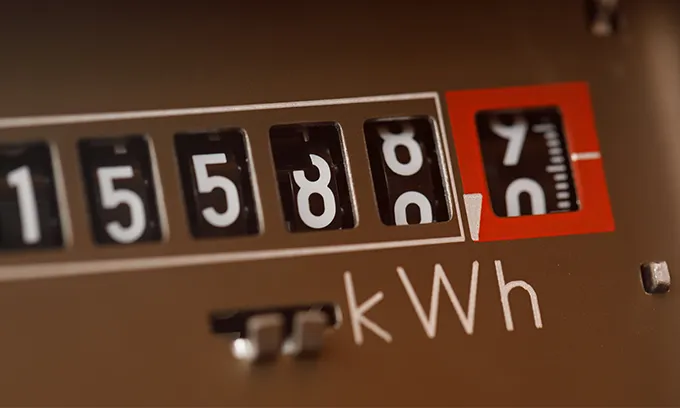
Your home's electricity usage (in kWh) is recorded by your electricity meter and passed on to your retailer for billing. Your bill will detail how many kWhs were used according to the meter. However, if you haven't got a smart meter, your energy company may estimate your usage between physical readings. For some perspective, the average five-person household consumes roughly 20kWh of electricity per day.
What's the difference between a kW and kWh?
It's common for people to confuse kW and kWh. The difference is that kW is a measurement of power, while a kWh is a measurement of energy. That might sound nit-picky, but it's an important distinction.
For example, a 4kW solar panel system has a maximum power output of 4kW. If that output is sustained over an hour, then the solar system will produce 4kWh of electricity. If it maintains that output for four hours, then the system will produce 16kWh.
So if you are considering a solar system and want it to cover half of your home's electricity usage (say, 10kWh), then you don't need a 10kW solar system, rather, you should only need a 2-3kW system – subject to the weather. Another way to think about this is to think of kW as speed and kWh as distance. The higher the speed (kW), the greater the distance you will cover (kWh).
Average Electricity Prices per kWh
Customers are charged for electricity per kilowatt hour of electricity they use – this is referred to as a variable usage charge. This price is what you pay for every kWh used, and the price can vary greatly depending on factors such as whether you're a low or standard user, if you are using power during peak or off-peak times, your choice of electricity provider, or even just where you live.
Power prices per kWh
The per kWh price refers to the price you are paying for the power you use. The table below shows the average regional rates for electricity across New Zealand.
Location | Total retail cost per kWh |
Westport | 45.45c |
Kerikeri | 45.42c |
Balclutha | 44.50c |
Greymouth | 44.41c |
Waipukurau | 43.25c |
Cromwell | 42.85c |
Blenheim | 41.85c |
Gisborne | 40.65c |
Taumaranui | 40.49c |
Otorohanga | 40.49c |
Dannevirke | 40.45c |
Pukekohe | 39.94c |
Hawera | 39.49c |
Masterton | 39.48c |
Rangiora | 39.39c |
Winton | 39.35c |
Kaiapoi | 39.01c |
Tauranga | 38.87c |
Whangarei | 38.70c |
Paraparaumu | 37.60c |
Oamaru | 37.54c |
Thames | 37.46c |
Queenstown | 36.89c |
Taupo | 36.78c |
Rotorua | 36.44c |
Whanganui | 36.34c |
Timaru | 36.27c |
Whakatane | 36.16c |
Cambridge | 36.11c |
New Zealand | 35.67c |
New Plymouth | 35.55c |
Dunedin | 35.54c |
Napier | 35.51c |
Palmerston North | 35.31c |
Richmond | 34.69c |
Nelson | 34.35c |
Auckland North Shore | 34.23c |
Auckland Central | 34.13c |
Hamilton | 33.97c |
Invercargill | 33.24c |
Ashburton | 32.67c |
Wellington City | 32.05c |
Christchurch | 31.93c |
Data: www.mbie.govt.nz Quarterly Survey of Domestic Electricity Prices to February 15, 2025.
Keep in mind that these are simply the average costs per kWh, and do not include the fixed daily charges.
What do electricity costs per kWh look like over a year?
If you take the average NZ price, you can see how that looks over the year below. Again, this table simply shows the variable charge, and does not include fixed daily charges and other costs you can expect to be added to your bill.
Remember, the average five-person household consumes roughly 20kWh of electricity per day, which equates to 7300kWh over 12 months.
kWh used per year | Cost per year (based on NZ average of 35.67c per kWh) |
2000kWh | $713 |
4000kWh | $1427 |
6000kWh | $2140 |
8000kWh | $2854 |
10,000kWh | $3567 |
Kilowatt hours and understanding your power bill
Your power bill includes a lot of useful information that you should be able to understand now that you have your head around kWhs. But the most important things to focus on are
- Fixed charges – these are displayed as cents or dollars per day. You are charged this fixed rate each day, regardless of how much power you use
- Variable charges – the cost of the power you've used, based on consumption in kilowatts per hour (kWh)
Your bill should also include a charge for the Electricity Authority levy. This charge funds the government agency's work to regulate the electricity industry, and is usually based on how much power you use. However, this is an unavoidable charge and isn't dependent on your choice of electricity provider.
Why it's important to understand kilowatt hours (and your power bill)
Energy literacy is the key to finding the best deal on electricity. Now that you understand kWhs, you should check your bills regularly to see how your electricity usage stacks up and whether there are savings to made by reducing your power usage, finding a better deal, or both.
Some providers may offer better rates on kWh charges but higher daily charges (or vice versa). They may offer flat rates or cheaper off-peak rates and other signing on perks. Getting a clear understanding of this will help you make the best decision when choosing power providers.
To find out whether you're getting a good deal on power, it's a good idea to start here, at Canstar. You can read guides on things to consider when changing power companies, or the best deals on offer, or check out our latest Electricity Award, which rates NZ power companies for Customer Satisfaction and Value for Money.