What type of electrical plug does NZ use?
New Zealand uses the Type I plug and socket standard. Type I plugs have three flat pins, two of which are angled to form an inverted V. The other pin runs vertically underneath.
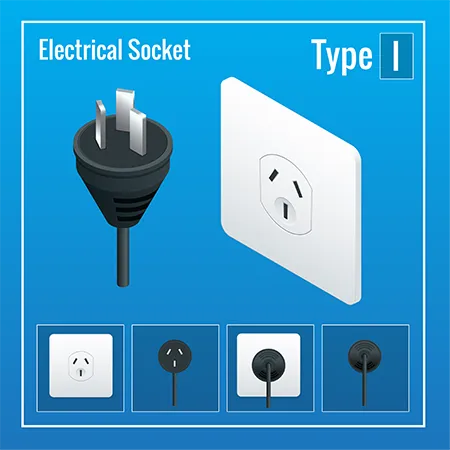
When looking directly at the pins, the angled one, top right, is for the active (hot or live) wire, which carries the current from the power source to the device.
The top left angled pin is for the neutral wire, which carries the current back from your device to the power source, completing the electrical circuit.
The bottom vertical pin is a ground/earth wire. This is a safety feature that provides a path for current to safely dissipate in the event of a fault or short circuit.
Does Australia use the same type of electrical plug as NZ?
Australia also uses the Type I plug and socket standard, and shares the same mains voltage: 230V. This means you don't need an adapter to use NZ devices when visiting OZ.
Which other countries use the same electrical plugs as NZ?
Aside from Australia and New Zealand, other countries that use the Type I plug and socket standard and share approximate mains voltages include:
- Argentina
- China
- Fiji
- Papa New Guinea
- Samoa
- Tokelau
- Tonga
- Tuvalu
Which countries require the use of power plug adaptors?
Most countries use different electrical plugs to NZ, so if you're visiting anywhere other than the few countries listed above, you'll need to purchase a plug adaptor.
And you could need to use a voltage converter, too. Most modern tech devices, such as phones and laptops, are dual-voltage, meaning you'll be able to use them wherever you're visiting, as long as you have the correct plug adaptor.
However, other electrical appliances that you may want to take on your travels, such as hair dryers and straighteners, are usually designed specifically for the voltage in the country they're sold in. So it's always advisable to check if your device/appliance is dual-voltage before you use it overseas, to prevent it being damaged.
And while you can purchase travel voltage converters, they tend to be a lot more expensive than standard plug adaptors, so you might want to consider leaving your non-voltage compliant electrical gadgets at home.